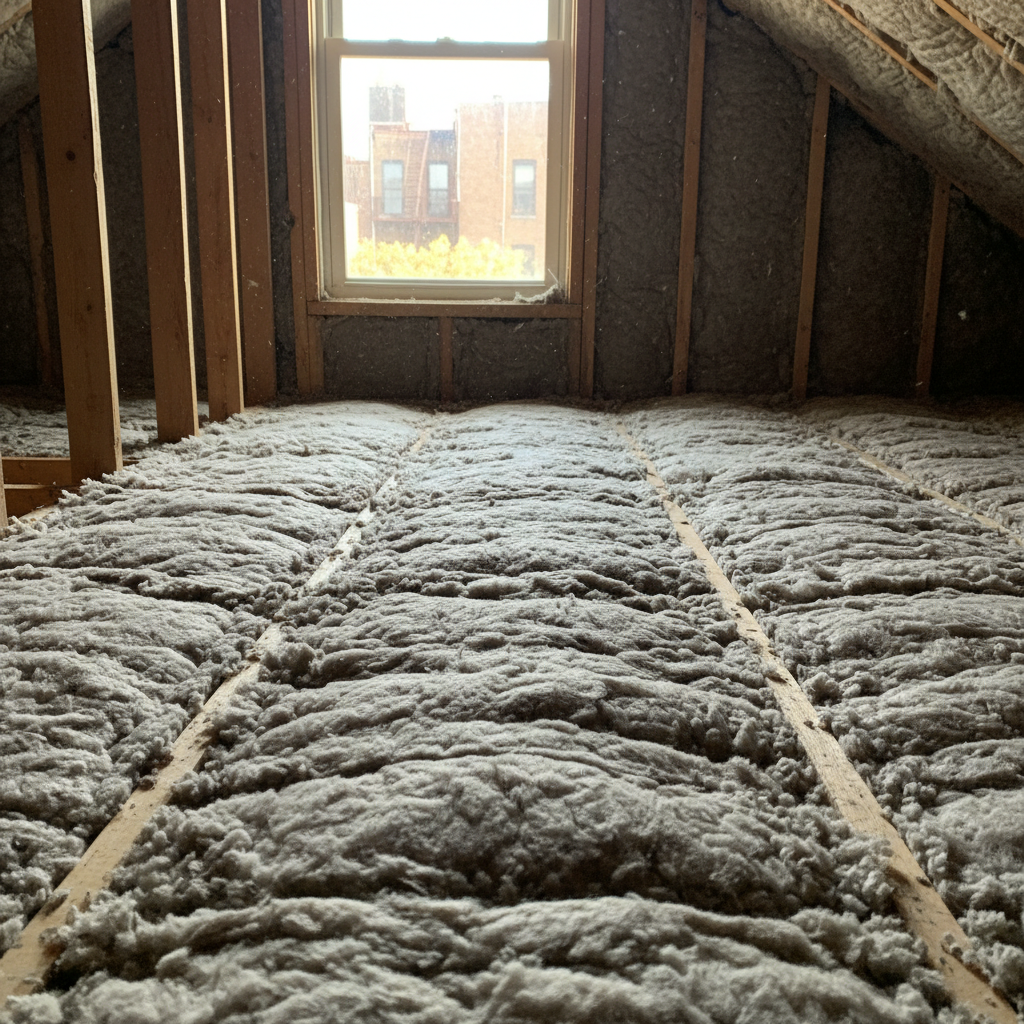
Thinking About Your Attic Insulation?
Let's talk about your attic. It's probably not the most exciting part of your house, but it's one of the most important when it comes to keeping your home comfortable and your energy bills down. A lot of folks in Brooklyn, especially those with older brownstones or rowhouses in places like Bay Ridge or Park Slope, have attics that are seriously under-insulated. Or worse, they've got old, matted-down stuff that's barely doing anything.
You're probably wondering if you can just throw some more insulation up there yourself. Good question. It depends a lot on your attic, your comfort level, and what kind of insulation you're dealing with.
Before You Start: What to Check
First things first, you gotta get up there and take a look. Grab a flashlight, maybe a dust mask, and a tape measure. Here's what you're looking for:
- Current Insulation Depth: How much do you have? If it's less than 10-12 inches, you probably need more. The Department of Energy recommends R-values between R-38 and R-60 for our climate zone. That's a lot of fluff.
- Type of Insulation: Is it loose-fill (like blown-in cellulose or fiberglass) or batts (those rolls or sheets)? This affects what you can add on top.
- Ventilation: Can you see your soffit vents (at the eaves) and your ridge vent (at the peak)? They shouldn't be blocked by insulation. If they are, you're asking for trouble with moisture and heat buildup. You might need baffles to keep them clear.
- Moisture or Pests: See any water stains, mold, or signs of critters? You need to fix those issues before adding insulation. Insulation won't stop a leak, and it'll just get ruined if it gets wet. Pests will just make a new home in your new insulation.
- Wiring and Recessed Lights: Note where all your electrical wires are. Some insulation types can't be in direct contact with certain electrical components or recessed light fixtures unless they're IC-rated (Insulated Contact). You don't want to start a fire.
DIY: When It Makes Sense
Okay, so you've done your inspection. If your attic is relatively easy to access, has a flat floor, and you're just adding another layer of batts or blowing in more loose-fill over existing, decent insulation, you might be able to tackle it yourself. This is usually for topping off what's already there.
Here's the general idea for DIY:
- Adding Batts: If you have existing batts, you can lay new batts perpendicular to the old ones to avoid thermal bridging (where heat escapes through the gaps between the joists). If you have loose-fill, you can lay batts over it, but make sure it's unfaced insulation so you don't create a double vapor barrier.
- Renting a Blower: Some home improvement stores rent out insulation blowers. If you buy enough bags of loose-fill insulation from them, they might even give you the rental for free. This is a two-person job: one feeding the machine outside or in the garage, one in the attic with the hose. It's dusty, it's hot, and you'll need good PPE (respirator, goggles, full-body suit).
Remember those ventilation baffles I mentioned? If you need to install those to protect your soffit vents, do it before you add more insulation. It's a crucial step for proper attic health.
Calling a Pro: When It's a Must
There are definitely times when you should just call in the experts. Don't mess around with these situations:
- No Existing Insulation: If your attic is bare or has very little insulation, a pro can achieve a much more uniform and effective R-value, especially with blown-in options like spray foam or dense-packed cellulose.
- Complex Attic Structure: Lots of weird angles, obstructions, or hard-to-reach spots? Pros have specialized equipment and experience to get insulation into every nook and cranny.
- Moisture, Mold, or Pests: If you found any of these, a professional insulation company can often help remediate the issues or recommend specialists before they insulate. You need to fix the root cause first.
- Asbestos or Vermiculite: If you suspect your old insulation might contain asbestos or vermiculite (which can contain asbestos), DO NOT TOUCH IT. Call an abatement specialist immediately. This is a serious health hazard.
- Air Sealing Needs: Before you insulate, you should air seal your attic. This means sealing up all the little gaps and cracks where conditioned air from your home leaks into the attic. Think around plumbing stacks, electrical wires, ceiling fixtures, and the top plates of your walls. A pro can do a thorough job of this with specialized sealants and techniques. Air sealing is often more important than the insulation itself for energy savings.
- Spray Foam: If you're considering spray foam insulation, that's a job for a professional, no question. It requires specialized equipment, training, and safety precautions. We do a lot of spray foam at Brooklyn Spray Foam, and it's not something you can just pick up at Home Depot.
After the Project: What to Expect
Once the insulation is in, whether you did it or we did, you should notice a difference pretty quickly. Your home will feel more comfortable – warmer in winter, cooler in summer. Your HVAC system won't have to work as hard, which means lower energy bills. Keep an eye on those utility statements; that's your real report card.
Also, make sure you keep your attic accessible if you ever need to get up there for repairs or inspections. Don't bury your access hatch with insulation. And if you've got any questions down the line, don't hesitate to reach out. We're here to help Brooklyn homeowners keep their houses efficient and cozy.