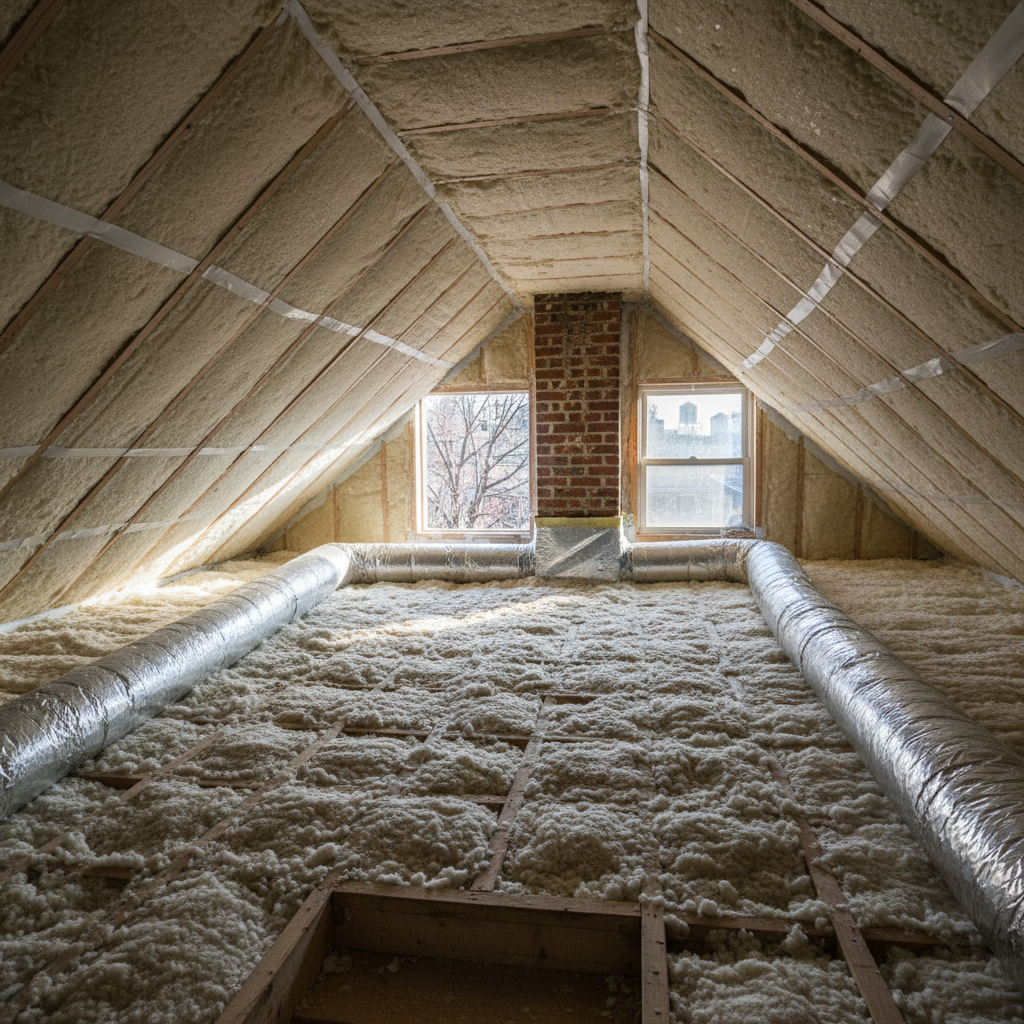
You’re finally getting around to that attic insulation project, huh? Good for you. It’s one of the best investments you can make in your home, especially here in Brooklyn where those old brownstones and row houses can be drafty as all get-out. But let me tell you, I’ve seen some real head-scratchers over the years – folks making simple, avoidable mistakes that end up costing them a lot of money and a lot of headaches. You don’t want to be one of them.
Ignoring the "Before" Picture
This is a big one. A lot of people just think, “More insulation equals better, right?” and they jump straight to getting quotes for R-values. But you’re missing a crucial step: checking what’s already up there. Is your old insulation moldy? Water-damaged? Infested with pests? Just piling new insulation on top of a problem isn't going to fix anything; it's just going to hide it and make it worse. I’ve been in attics in places like Bay Ridge and Park Slope where the existing insulation was a health hazard. You need a pro to assess the current situation first. Sometimes, the best insulation job starts with a thorough clean-out and air sealing.
Not Addressing Air Leaks First
This goes hand-in-hand with the first point. Insulation slows heat transfer, but it doesn't stop air movement. If your attic isn’t properly air-sealed, you’re basically trying to keep a leaky bucket full. All that expensive conditioned air from your living space is just going to escape right through gaps around plumbing stacks, electrical wires, recessed lights, and attic hatches. I can’t stress this enough: air sealing is paramount. It’s often more important than adding another foot of insulation. A good contractor, like us at Brooklyn Spray Foam, will always prioritize finding and sealing those leaks before blowing in any new material. If a contractor just wants to dump insulation without talking about air sealing, that’s a huge red flag.
Focusing Only on R-Value
R-value is important, don't get me wrong. It measures thermal resistance. But it’s not the only factor. Different insulation materials perform differently in the real world, especially when you factor in air movement and moisture. For example, a high R-value batt insulation won't perform as well if it's compressed or if there are gaps around it. Spray foam, on the other hand, creates an air seal and fills every nook and cranny, often outperforming other materials with similar stated R-values because it eliminates air leakage. Don't just ask,