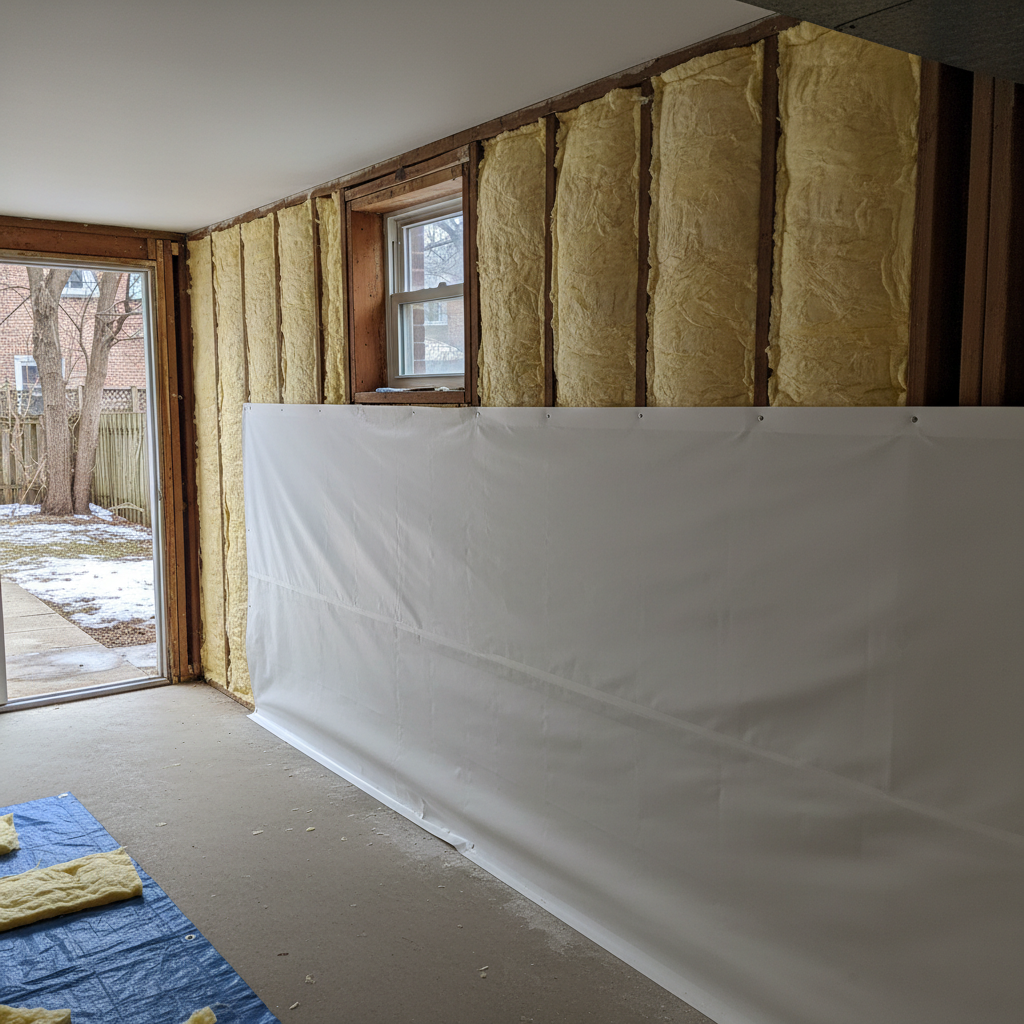
Walking into a Park Slope or Flatbush basement in January often feels like stepping into an icebox. Many homeowners assume they can simply place fiberglass batts against the foundation walls and finish the job. Having worked on structural and weatherization projects across Brooklyn for years, basement insulation is one of the trickiest jobs to get right. If the installation is done incorrectly, homeowners waste hundreds of dollars per year on heating bills and create the right conditions for mold and rot.
Ignoring Water Issues Before Insulating
The single biggest mistake homeowners make is trying to insulate a damp or leaky basement. When water seeps through fieldstone or concrete foundation walls during a heavy nor'easter, putting Insulation over the area causes severe problems. Moisture gets trapped behind the material, creating a breeding ground for mold and accelerating masonry decay. Property owners must fix grading, gutters, and exterior cracks first. If a contractor tries to sell an Insulation package without checking moisture levels, it is best to look elsewhere.
Using the Wrong Materials for Underground Walls
Standard fiberglass batts do not belong in a basement. The local humidity and cold subterranean walls mean organic materials absorb moisture, sag, and lose all thermal value. Brooklyn Spray Foam usually points clients toward closed-cell spray foam or rigid foam boards because they act as both an air barrier and a vapor retarder. Choosing cheap materials to save a few dollars upfront costs a fortune when the material must be torn out two years later due to mildew.
Forgetting the Rim Joists
People focus entirely on the concrete foundation walls and completely forget about the rim joists, which is the area where the foundation meets the wooden framing overhead. That exact perimeter is responsible for a massive chunk of heat loss and draftiness in a home. When planning a project, Rim Joist Insulation must be front and center. Skipping this step means a basement will still feel drafty no matter how thick the wall Insulation is.
Skipping Professional Ventilation Plans
Tightening up an old Brooklyn basement makes a home much more energy-efficient, but it also changes how the house breathes. Homes with gas-burning appliances like a boiler or water heater in the basement require careful planning; sealing the space completely without accounting for combustion air can pull dangerous carbon monoxide back into living areas. A qualified contractor evaluates combustion safety and airflow requirements before altering the thermal envelope of a basement. Brooklyn Spray Foam makes sure every mechanical factor is reviewed before any work begins.