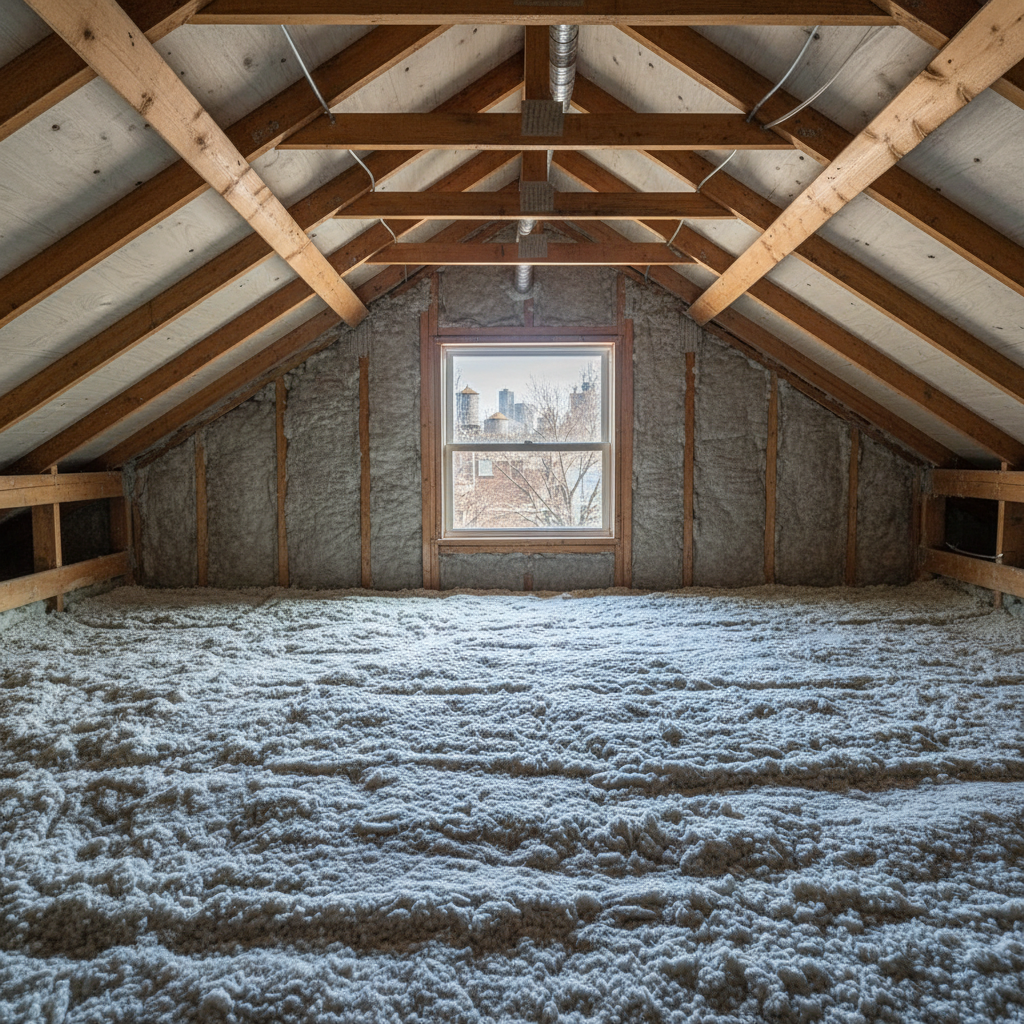
You put money into blown-in insulation for a good reason. You want to keep your Brooklyn home comfortable. You also want to cut down on those high energy bills. This makes life a little easier. It is a smart choice, especially with our wild weather here in Brooklyn. We get humid, sticky summers as well as biting cold winters. But here is the thing: blown-in insulation is tough, but it is not totally maintenance-free. You need to give it some attention to make sure it lasts and does its job right.
Extend the Life of Your Blown-In Insulation
First, let us talk about getting the most out of your investment. You want that insulation working for you for many years. Blown-in insulation, whether it is fiberglass or cellulose, can last 15 to 20 years. Sometimes it can even last up to 25 years. This is if you take care of it properly.
- Keep it Dry, Always: This is probably the most important thing. Water is the enemy of insulation. A leaky roof can soak your insulation. Plumbing issues can also cause problems. Even just high humidity can make your insulation wet. Wet insulation loses its R-value. This means it stops insulating well. It can also become a place for mold to grow. In Brooklyn, we get heavy rains as well as humid summers. Moisture control is important here. Make sure your roof is in good shape. Gutters should be clear. Any pipes in the attic should not be dripping.
- Mind the Airflow: Good ventilation in your attic is important. It helps stop moisture from building up. It also keeps the insulation working its best. Just make sure that ventilation is not blowing your insulation around. This is especially true if it is loose-fill insulation.
- Do Not Disturb It: Once the insulation is in there, try to leave it alone. Walking on it can compress the material. Moving things around can also compress it. Even just poking at it can make it less effective. When insulation gets compressed, it loses its insulating power. If you have to go into the attic, try to step on the joists. Do not step directly on the insulation.
- Seal Up Those Leaks: We always suggest air sealing before we even blow in insulation. If you did not get that done, or if new gaps have appeared, seal them up. Air leaks around wiring let conditioned air escape. Leaks around plumbing as well as ductwork also let outside air creep in. This makes your insulation work harder than it needs to.
What Regular Maintenance Looks Like
You do not need to be up in your attic every weekend. A small check-up now and then helps a lot. Think of it like changing the oil in your car.
- Annual Visual Check: Once a year, take a quick look in your attic. Do this before winter or summer really starts. Look for any clear signs of trouble. Is the insulation still spread out evenly? Are there any compressed spots or bare patches?
- Check for Pests: Rodents as well as insects like to make nests in insulation. Look for droppings. Look for nests or tunnels. If you find signs of pests, you will need to deal with that problem first. Then you can fix or replace any damaged insulation.
- Look for Moisture: Are there any water stains on the insulation? Are there water stains on the wood beneath it? Do you notice any musty smells? These are warning signs for moisture problems.
- Keep Vents Clear: Make sure your attic vents are not blocked by insulation or debris. Good airflow is important for stopping moisture as well as heat buildup.
Warning Signs of Problems
Your house will tell you when something is not right. You just need to pay attention. Do not ignore these signals.
- Sky-High Energy Bills: If your heating or cooling costs suddenly go up, and you have not changed your habits, your insulation might be failing. Your HVAC system is working too hard to keep up.
- Drafts and Uneven Temperatures: Are some rooms always cold in winter or hot in summer? This can happen even when the thermostat is set right. Do you feel drafts near walls or windows? That is a common sign of insulation problems. In an old brownstone in Park Slope, for example, you might feel a big difference between the front and back rooms. This can happen if the wall insulation has settled.
- Ice Dams on Your Roof: In winter, if you see large icicles or ice dams forming along your roof edges, it means heat is escaping from your attic. This heat melts the snow, which then freezes again. This is a clear sign of not enough attic insulation.
- Moisture, Mold, or Musty Odors: If you smell something damp or moldy, or see visible mold growth or water stains on ceilings or walls, it is a serious issue. Wet insulation can lead to mold as well as structural damage.
- Pest Infestations: If you are suddenly seeing more animals than usual inside, your insulation might be damaged. This gives them an easy way to get in.
- Noisy House: Insulation also helps with sound control. If outside noises or sounds between rooms seem louder, your insulation might not be as dense or complete as it should be.
When to Call a Professional
Some things you can handle yourself. But for insulation, it is often best to bring in the professionals. You should definitely call us at Brooklyn Spray Foam if you notice any of these things.
- Significant Water Damage or Mold: If your insulation is soaked or you see a lot of mold, it needs to be removed and replaced safely. This is not a do-it-yourself job.
- Major Settling or Bare Spots: If large areas of your blown-in insulation have settled a lot, this creates thin spots or gaps. You will need more material blown in to get the R-value back.
- Persistent High Energy Bills or Comfort Issues: If you have checked everything else and your home is still uncomfortable or your bills are high, a professional energy audit can find the exact problem. We use tools like thermal imaging to see exactly where heat is escaping.
- Pest Infestation That Damaged Insulation: After you have dealt with the pests, the damaged insulation needs to be cleaned out and replaced. This helps prevent future problems. It also brings back the thermal performance.
- You Are Not Sure What Is Going On: Honestly, if you are confused and cannot figure out why your home feels drafty or your bills are high, just give us a call. We can look at your existing insulation. We can tell you if it is still doing its job. We can also suggest the right solutions. Our team is here to help you keep your Brooklyn home efficient as well as comfortable for a long time.