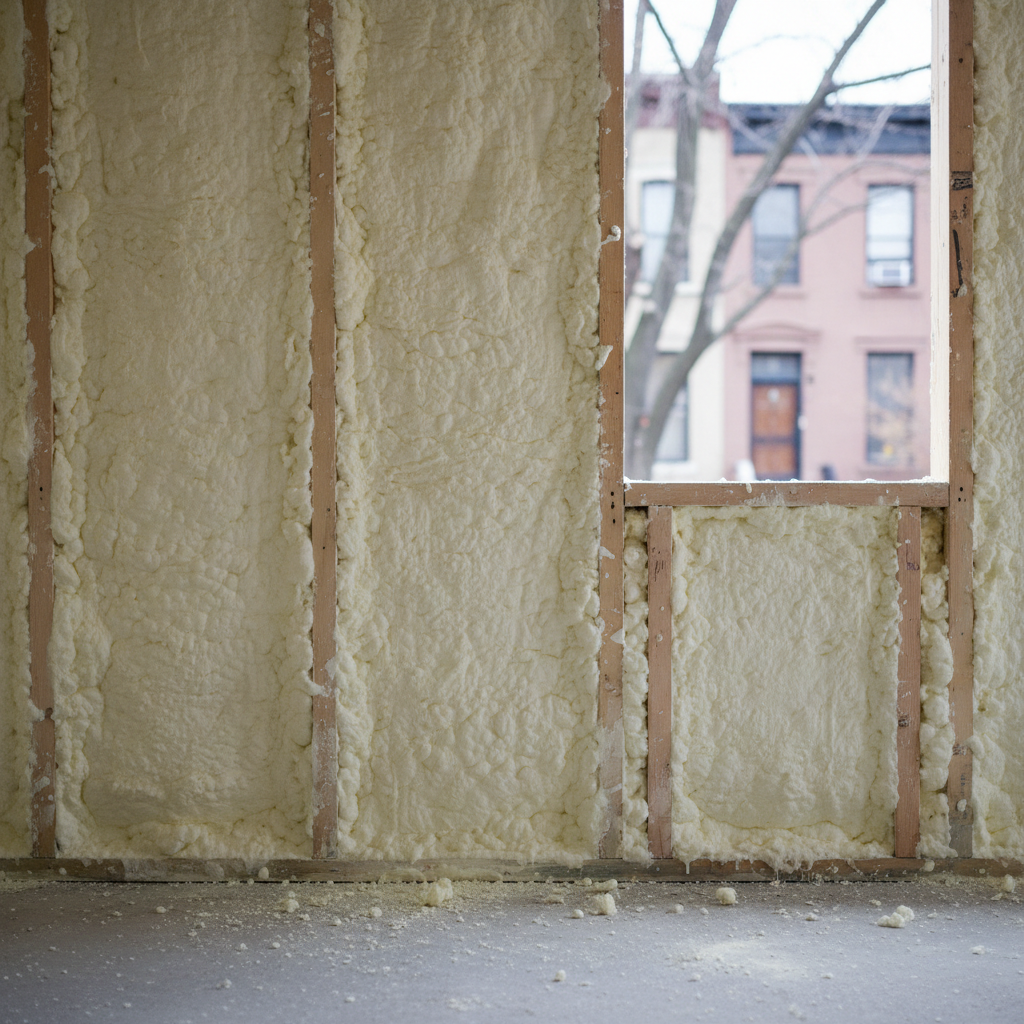
What's the Deal with Closed-Cell Spray Foam?
Alright, let's talk spray foam. Specifically, closed-cell spray foam. You've probably heard the buzz, maybe seen some videos, but what does it really mean for your Brooklyn brownstone or row house? Simply put, it's a game-changer for insulation. Unlike open-cell foam or traditional fiberglass, closed-cell foam is dense. Super dense. The cells are packed tight, creating a vapor barrier and an air seal all in one go. That means no more drafts, less moisture getting in, and a much more stable temperature inside your home.
For us here in Brooklyn, where we get those damp, chilly winters and humid summers, and where a lot of our older homes have leaky envelopes, this stuff is gold. It's not just about keeping warm or cool; it's about protecting your home from moisture damage and even adding structural rigidity to walls.
Before You Even Think About Spraying
First things first: is closed-cell spray foam right for your project? Most of the time, yes, especially for crawl spaces, rim joists, or any exterior wall cavity. But it's not a one-size-fits-all solution for every single spot. For instance, if you're insulating an attic where you want to keep the space 'unconditioned' and allow moisture to escape through the roof, open-cell might be a better fit. But for those areas where you absolutely need a tight seal and moisture control, closed-cell is king.
Before any work starts, you've got to clear out the area. I mean, really clear it out. We need a clean, dry surface. Any old insulation, debris, or moisture needs to be gone. You can definitely handle this part yourself. Get in there, remove old batts, sweep up, and make sure everything's dry. If there's any active water intrusion, you need to fix that first. Spray foam won't stop a leak; it'll just trap the water.
Next, think about what's going to be in the walls or ceiling. Electrical wires? Plumbing? HVAC ducts? All that stuff needs to be installed and inspected *before* the foam goes in. Once it's sprayed, it's a pain to get to anything behind it. Trust me, you don't want to be cutting out cured foam because you forgot to run a cable.
During the Spray Foam Project: What to Expect
This is where the DIY vs. Pro line gets drawn, clear as day. You absolutely, positively, should NOT try to spray closed-cell foam yourself unless you're a trained professional with the right equipment. I'm not just saying that because I run Brooklyn Spray Foam. This isn't like painting a wall. The chemicals involved are serious business. You need specialized equipment, proper ventilation, and extensive safety gear – respirators, full body suits, eye protection. The fumes during application are no joke, and if the chemicals aren't mixed perfectly, the foam won't cure right, and you'll have a big, expensive mess on your hands.
When we come in, we'll set up containment, protect surrounding areas, and get suited up. The spraying itself is quick. You'll see the liquid expand almost instantly into a rigid foam. It's pretty impressive to watch. During this time, you and your family need to be out of the house. We're talking 24-48 hours, depending on ventilation and the specific product used. This isn't negotiable. Safety first, always.
After the Foam is Cured
Once the foam is cured and the air has cleared, you're left with a rock-solid, incredibly efficient insulation layer. What's left for you to do? Well, if there's any overspray or areas that need trimming, that can be done. Sometimes, especially in older Brooklyn homes with uneven joists, you might get some areas where the foam expands beyond the cavity. A sharp knife or saw can trim this flush. This is a task you can tackle yourself, but wear a mask to avoid inhaling any dust. The cured foam is inert, but dust is still dust.
Then comes the finishing touches. You'll be putting up drywall, paneling, or whatever your chosen finish is. Because closed-cell foam is so dense and rigid, it provides a fantastic substrate. You might even find your walls feel more solid than before. You'll notice the difference in your home's comfort right away. Less noise from the street, more consistent temperatures, and your HVAC system won't be working nearly as hard. That means lower energy bills, which is always a win.
So, while you can handle the prep and the post-cleanup, leave the actual spraying to the pros. It's a specialized job, and getting it right the first time saves you a ton of headaches and money down the line. If you're ready to make your home significantly more comfortable and energy-efficient, give us a call at Brooklyn Spray Foam. We're happy to walk you through the process and see if closed-cell foam is the right move for your place.